

September: Wildlife of Yakushima
September 30, 2026
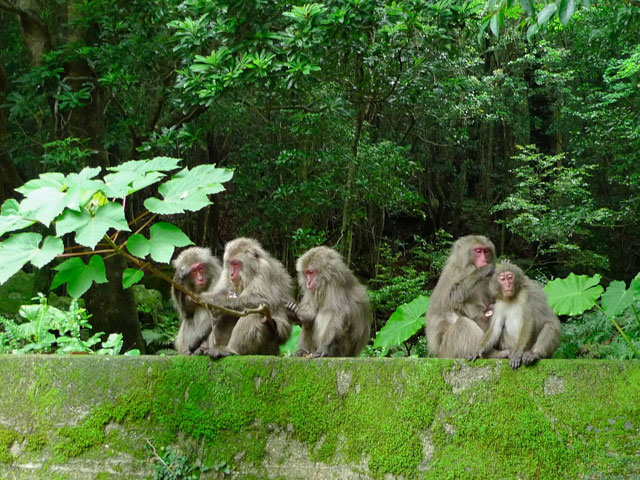
A wild, mountainous island of ancient cedar forests and unusual residents, Yakushima is a dream destination for nature lovers.
Located around 60 kilometers off the southern coast of Kagoshima Prefecture in Kyushu, this subtropical island is known for its moss-covered trails and towering cedar trees, landscapes that helped inspire the world of Studio Ghibli’s Princess Mononoke. In 1993, Yakushima became one of Japan’s first UNESCO World Natural Heritage sites. Among its ancient trees is Jomon Sugi, believed to be somewhere between 2,000 and 7,200 years old, with the trek there and back taking around eight to ten hours. Shaped by centuries of heavy rain, typhoons and strong winds, Yakushima’s ancient cedars lend the forests an otherworldly atmosphere.
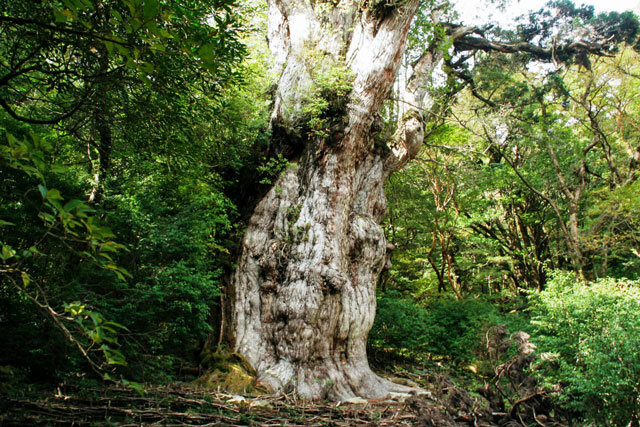
Estimated to be between 2,000 and 7,200 years old, Jomon Sugi stands as one of the most enduring symbols of Yakushima’s ancient forests (Photo credit: Yakushima Tourism Association)
Yakushima’s dramatic landscape was formed as granite deep beneath the earth was pushed upward through tectonic activity. Rising from subtropical coastline to mountains nearly 2,000 meters high, the island encompasses remarkable variations in climate and vegetation. Sun-drenched beaches, temperate forests, waterfalls, deep ravines and mountain peaks supporting alpine plants can all be found within this relatively small island. Such environmental diversity has also created distinctive habitats for Yakushima’s wildlife.
Among the island’s best-known inhabitants are two animals found nowhere else in quite the same form: the Yakushima deer, or Yakushika, and the Yakushima macaque, commonly known as Yakuzaru. Both are endemic subspecies that have developed distinctive characteristics in Yakushima’s isolated environment. Smaller than sika deer found on the Japanese mainland, Yakushika range widely across the island, from coastal areas and forests to elevations above 1,000 meters. They remain active throughout the year, feeding on the varied vegetation of the island.
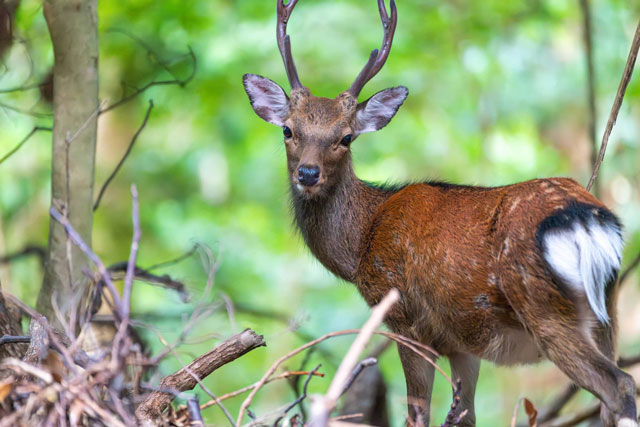
A Yakushima deer pauses among the forest vegetation—a reminder that wildlife encounters on Yakushima happen on the animals’ terms (Photo credit: PIXTA)
Yakushima macaques are likewise smaller than their mainland counterparts, with darker bodies and longer, coarser fur. Living in social groups, they can be found across much of Yakushima, particularly in the coastal areas and evergreen forests. One of the best-known places to encounter both macaques and deer is the Seibu Rindo Forest Path, which passes through a rich evergreen broadleaf forest within the World Heritage area. Here, visitors may see macaques foraging for fruits and other foods or moving through the forest in groups.
Encounters with Yakushima’s deer and macaques are best enjoyed from a respectful distance. Unlike the deer of Nara or some of Japan’s other animals accustomed to close interaction with visitors, Yakushima’s wildlife should never be fed or approached. Feeding wild Yakuzaru is prohibited by a Yakushima Town Ordinance and carries a fine of 50,000 yen, as feeding can alter their natural behavior and damage both the ecosystem and local agriculture. Visitors should instead observe quietly, keep their distance, and allow the animals to continue their natural routines undisturbed.
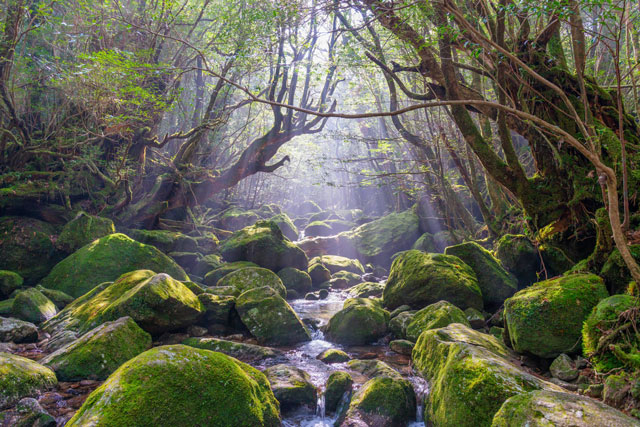
Moss-covered trees and filtered light give the forests of Shiratani Unsuikyo their otherworldly atmosphere (Photo credit: PIXTA)
This respect for wildlife forms part of a broader approach to protecting Yakushima’s extraordinary natural environment. The Yakushima World Heritage Conservation Center is an excellent place to learn about the island’s ecosystems, World Heritage status, conservation efforts and responsible ways to explore its forests. Visitors can also stop at the Yakushima Tourism Center for travel information, souvenirs and mountain gear rental. Local cedar crafts, sweets made with ponkan and tankan citrus, seafood and shochu offer another glimpse into island life, while the upstairs restaurant serves Yakushima specialties such as flying fish ramen, gooseneck barnacles and tankan ice cream.
Exploring Yakushima’s ancient forests and encountering the animals that live among them offers a glimpse into an island shaped by remarkable contrasts. From subtropical shores to mist-covered mountains, ancient cedars to roaming deer and macaques, life here has adapted to the rhythms of rain, elevation and isolation over countless generations. To walk through Yakushima is to experience these different forms of life not in isolation, but as part of a landscape that continues to evolve around them.
For more details, contact DMC Japan to discuss ideas, locations and rates.
Contact Us