

June: Musasabi of Mt. Takao
June 30, 2026

Rarely seen during the day, musasabi spend much of their lives high among the trees (Photo credit: PIXTA)
With their large eyes, bushy tails and remarkable ability to glide silently through the forest canopy, musasabi are among Japan’s most fascinating nocturnal mammals. Rarely seen during the day, they emerge after sunset to soar between trees, making an encounter in the wild feel both unexpected and unforgettable.
Officially known as the Japanese giant flying squirrel (Petaurista leucogenys), musasabi are found across much of Honshu, Shikoku and Kyushu. Preferring mature forests with large trees, they nest in natural hollows and spend most of their lives high above the forest floor. Because of their nocturnal lifestyle, many people visit the mountains for years without ever realizing these remarkable mammals are living overhead. Located on the western edge of Tokyo, Mt. Takao is also home to the much smaller momonga, or Japanese dwarf flying squirrel (Pteromys momonga). While the two species are often confused because both glide between trees, musasabi are significantly larger and are the species most often observed during guided wildlife tours.
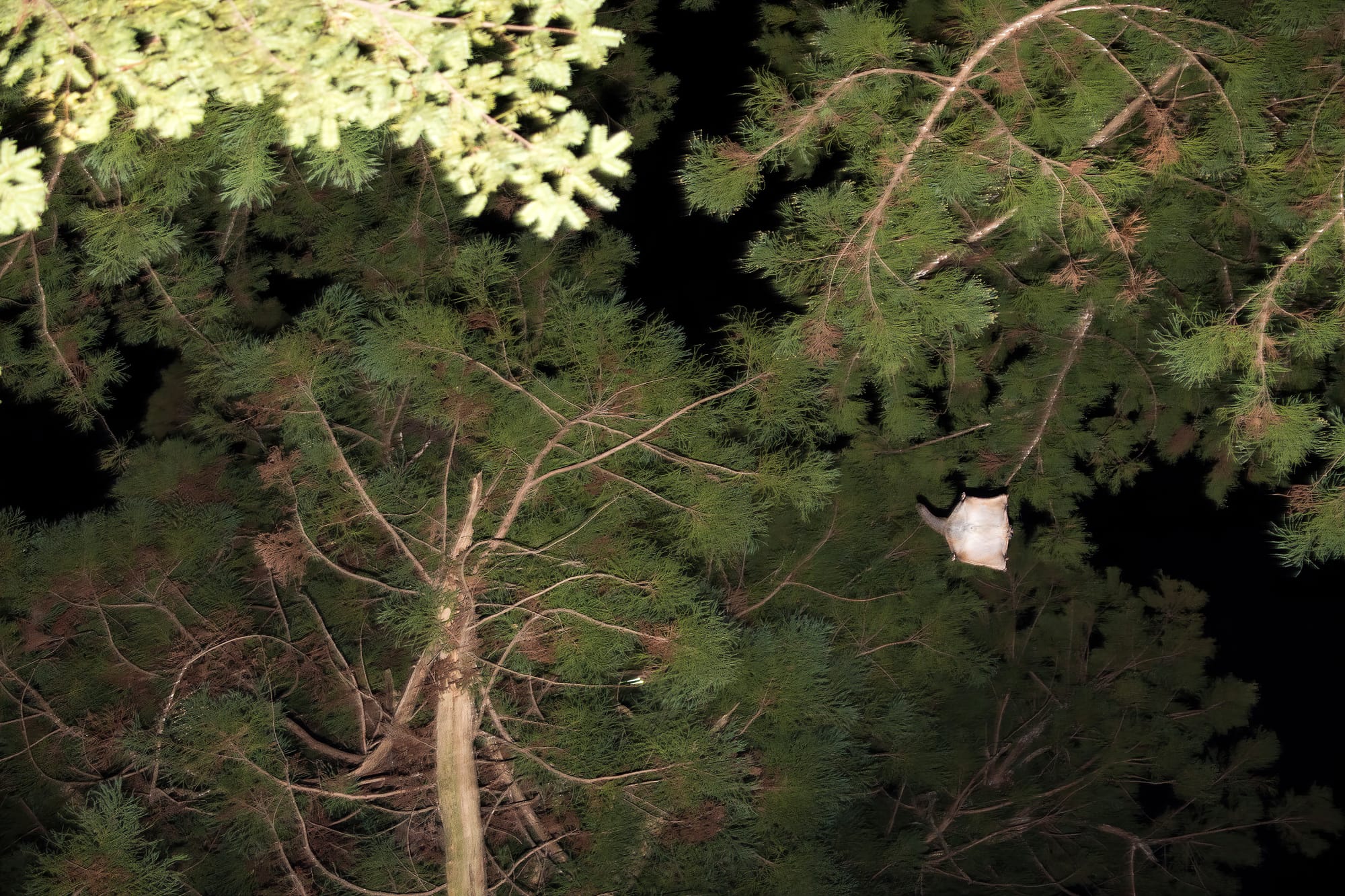
After sunset, musasabi emerge from the forest canopy, gliding silently through the darkness in search of food (Photo credit: PIXTA)
Like other flying squirrels, musasabi do not truly fly. Instead, a membrane of skin called a patagium stretches between their limbs, allowing them to glide from tree to tree. A single glide can cover more than 100 meters, helping them move through the forest while searching for leaves, buds, seeds and fruit. Yet even on Mt. Takao, one of Japan’s best places to look for them, sightings are never guaranteed. Learning where and when to look is often just as important as luck.
Led by experienced nature guides, these evening tours help visitors develop the skills to spot Mt. Takao’s nocturnal wildlife while exploring the mountain’s quieter forest trails. Rather than guaranteeing sightings, the tours focus on observing animals responsibly and learning about the forest ecosystem, with minimal disturbance to the creatures being observed.
Participants also learn to recognize field signs left behind by musasabi, such as distinctive feeding marks on leaves and buds. These subtle clues can reveal the presence of wildlife even when the animals themselves remain hidden high in the canopy. Mature forests provide important habitat for musasabi, which rely on old trees and natural hollows for nesting and shelter. By encouraging visitors to learn more about musasabi and the woodlands they inhabit, the tours help foster a greater appreciation for forest conservation in Japan.
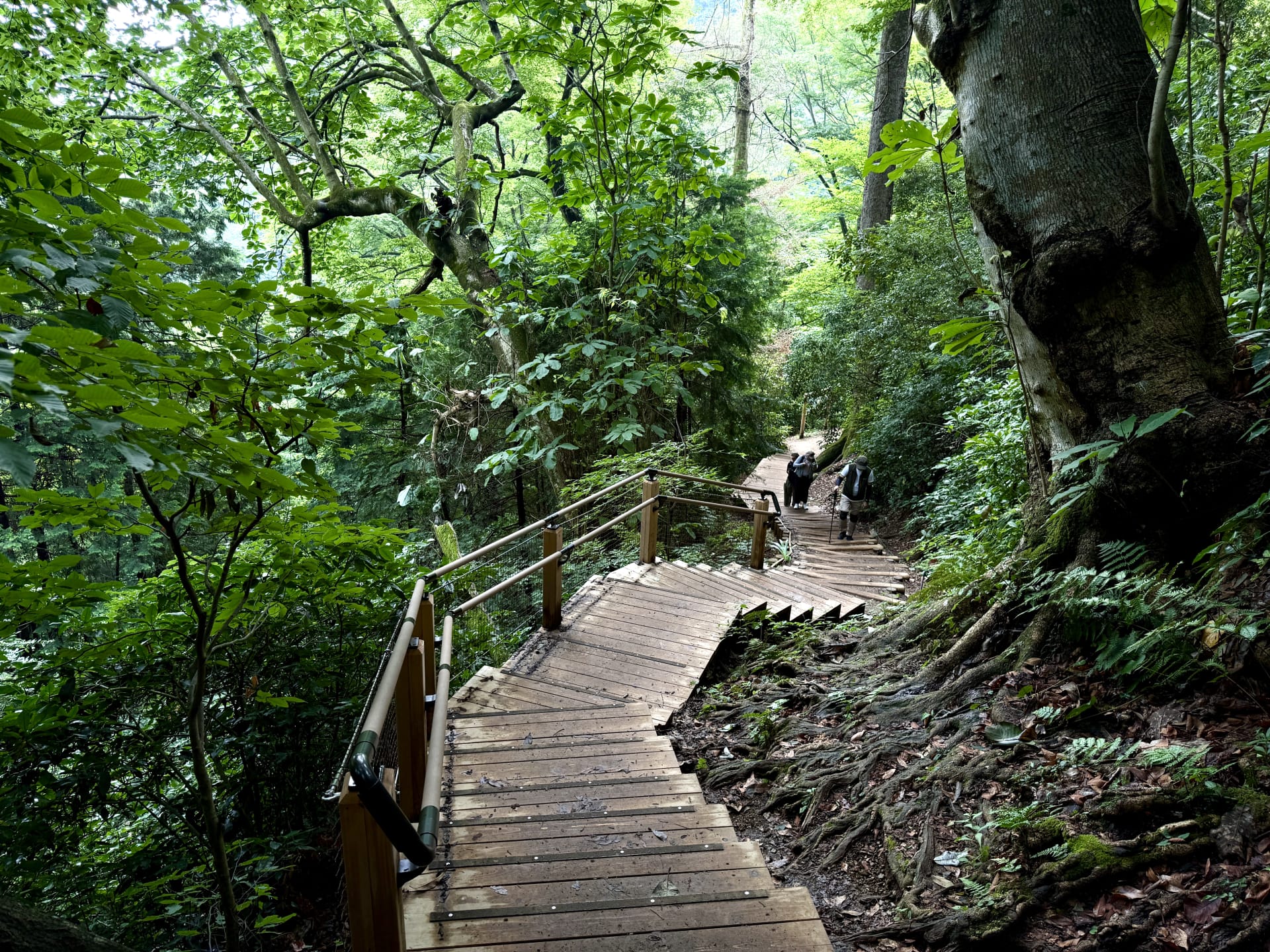
Like musasabi, which feed on more than 30 different plant species throughout the year, hikers on Mt. Takao are spoiled for choice when it comes to local flavors. The mountain’s trails are lined with traditional eateries serving specialties such as tororo soba, buckwheat noodles topped with grated yam, freshly grilled dango rice dumplings and the popular Tengu-yaki. Filled with sweet black bean paste and baked in the shape of a tengu face, this local favorite takes its name from the mountain’s long association with the tengu, mythical mountain guardians and messengers of the gods. Visitors to Mt. Takao’s Yakuo-in Temple will find tengu imagery throughout the grounds, reflecting the mountain’s long tradition of spiritual practice and folklore.
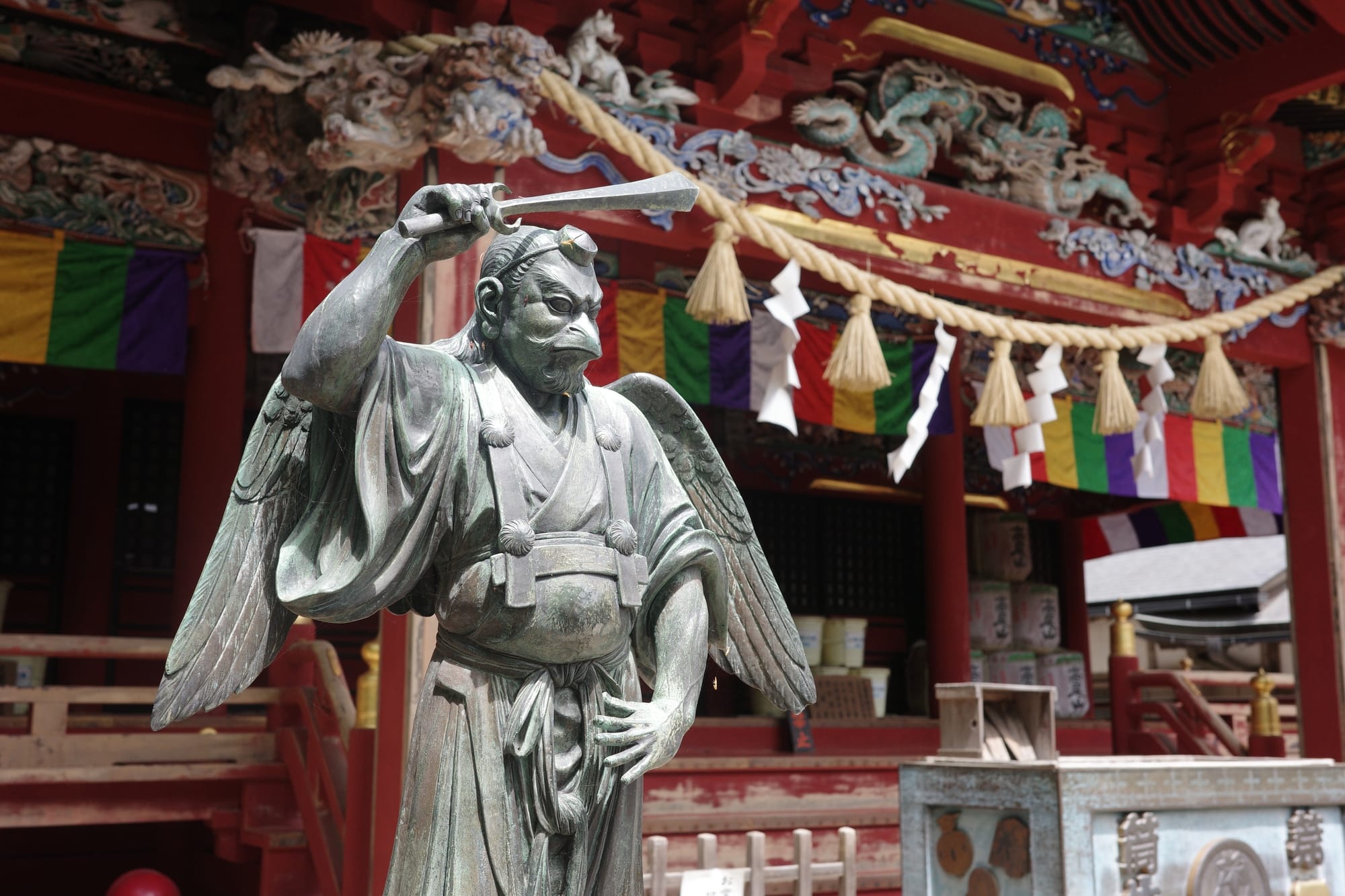
Tengu statues can be found throughout Mt. Takao’s Yakuo-in Temple, reflecting centuries of mountain worship and folklore (Photo credit: PIXTA)
That connection between spirituality and nature continues to shape Mt. Takao today. For centuries, the mountain’s forests have been protected through their association with Yakuo-in Temple and the sacred landscape surrounding it. As a result, many ancient trees and woodland habitats have survived close to one of the world’s largest cities. These mature forests provide a refuge not only for musasabi, but for countless other species that thrive in the mountain ecosystem. Whether visitors come in search of wildlife, local cuisine or spiritual history, Mt. Takao offers a reminder that healthy forests and cultural traditions often flourish side by side.
For more details, contact DMC Japan to discuss ideas, locations and rates.
Contact Us