

May: Fireflies of Shikoku
May 29, 2026
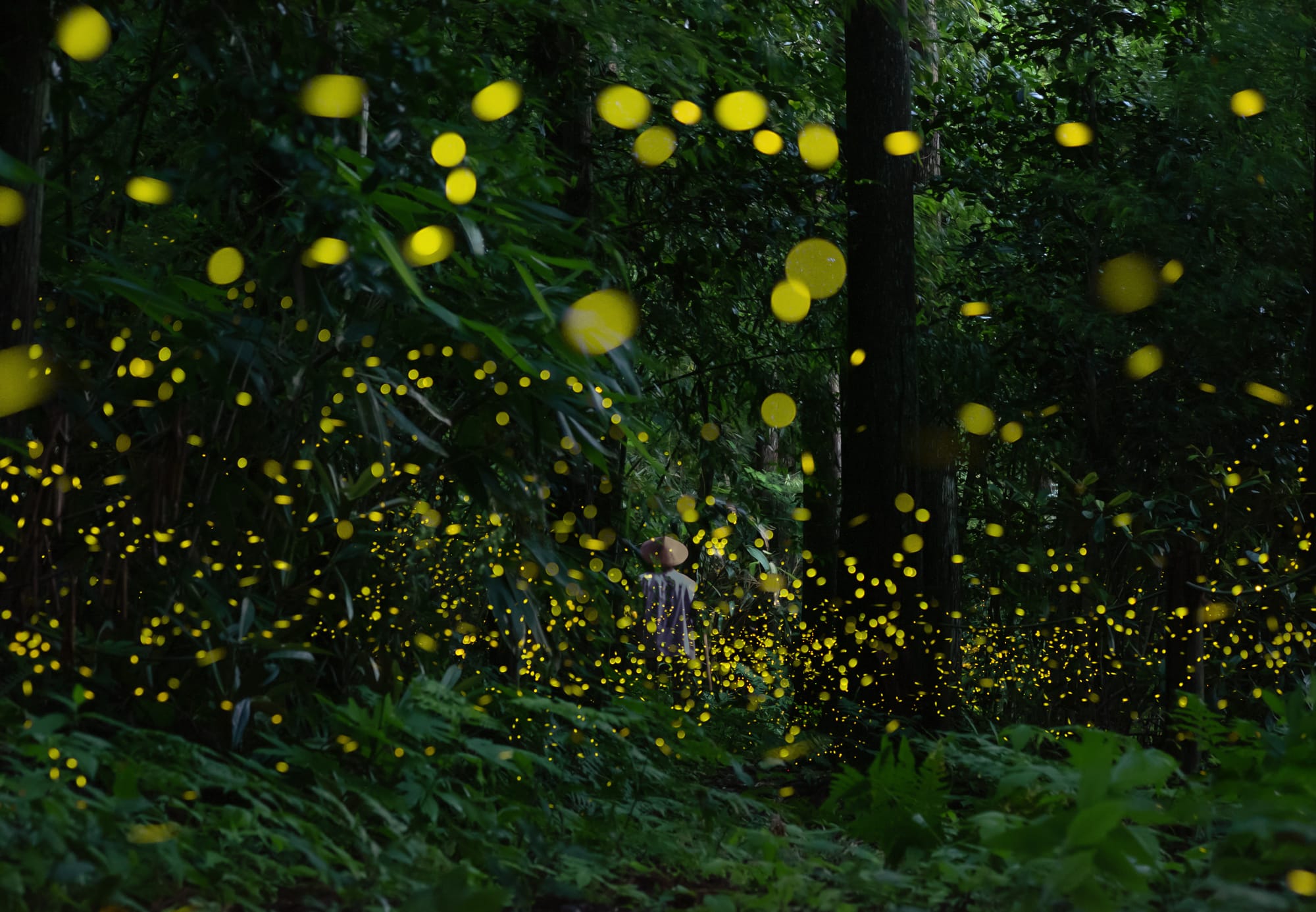
As night falls, fireflies fill Shikoku’s forests with soft flashes of light (Photo credit: PIXTA)
Fireflies glimmering along a river’s edge may seem like a scene from a fantasy film, but in the Shikoku region, it is a very real part of the early summer landscape.
From April to June is considered the best time to see fireflies across much of Japan, when they add a soft glow to rivers, rice paddies and forests after dark. Flashing to attract mates and communicate with one another, these tiny insects live only briefly as adults. Some species are aquatic and thrive in rivers and rice paddies, while others live in forested areas. Their fleeting lights and nocturnal habits have long given fireflies an air of mystery in Japanese folklore.
The word hotaru, meaning firefly, appears in the Nihon Shoki, one of Japan’s oldest historical chronicles, compiled in AD 720. One theory suggests that the “ho” comes from the word for fire, while “taru” may derive from “tare” meaning “to hang down,” possibly referring to the insects’ dangling glow. Although the science behind their bioluminescence is highly complex, fireflies produce light through a chemical reaction involving oxygen within their bodies. The light is reflected through specialized cells in the abdomen, creating the soft flashes seen on summer nights.
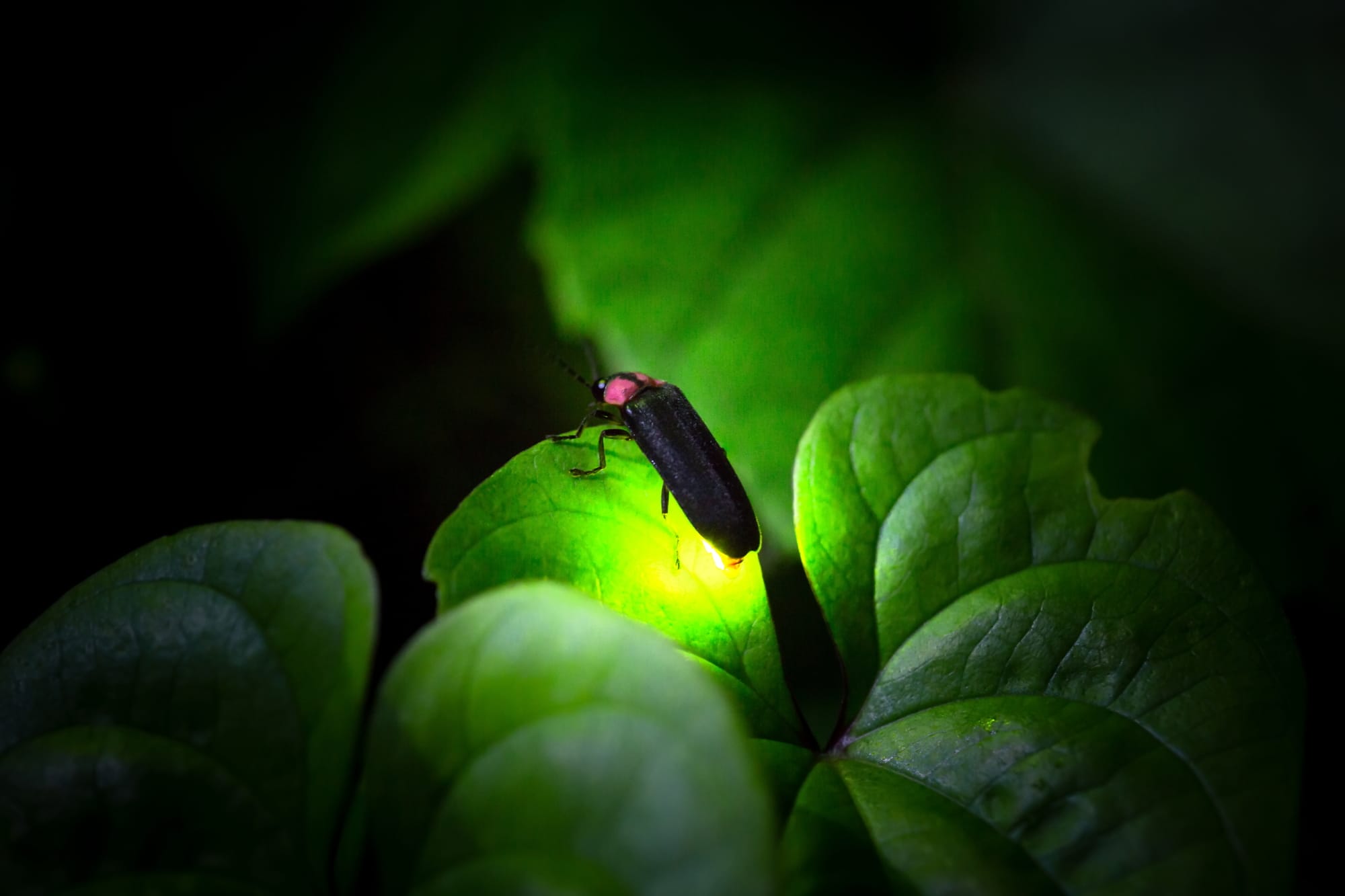
The Genji firefly is known for its slow, rhythmic flashes and is commonly found near rivers (Photo credit: PIXTA)
There are around 50 species of firefly in Japan, although only about 14 emit the glowing light most people associate with them. Among the most common are the Genji and Heike fireflies, named after the rival clans of the 12th-century Genpei War. In some Japanese legends, the souls of fallen warriors were said to return as fireflies drifting through the night. The larger Genji firefly is thought to have inherited the name of the victorious clan. Despite these historical associations, fireflies today are seen as symbols of peace and tranquility, thriving only in environments with clean water, dark skies and quiet surroundings.
Despite their historical rivalry, Genji and Heike fireflies share several traits: both are aquatic during their larval stage and feed on snails. There are also subtle ways to tell them apart. The larger Genji firefly, commonly found near rivers, emits slow flashes every few seconds and is known for synchronizing its light patterns with others nearby. The smaller Heike firefly has adapted to life around rice paddies and tends to flicker more rapidly, often gathering in softly glowing groups on summer evenings.
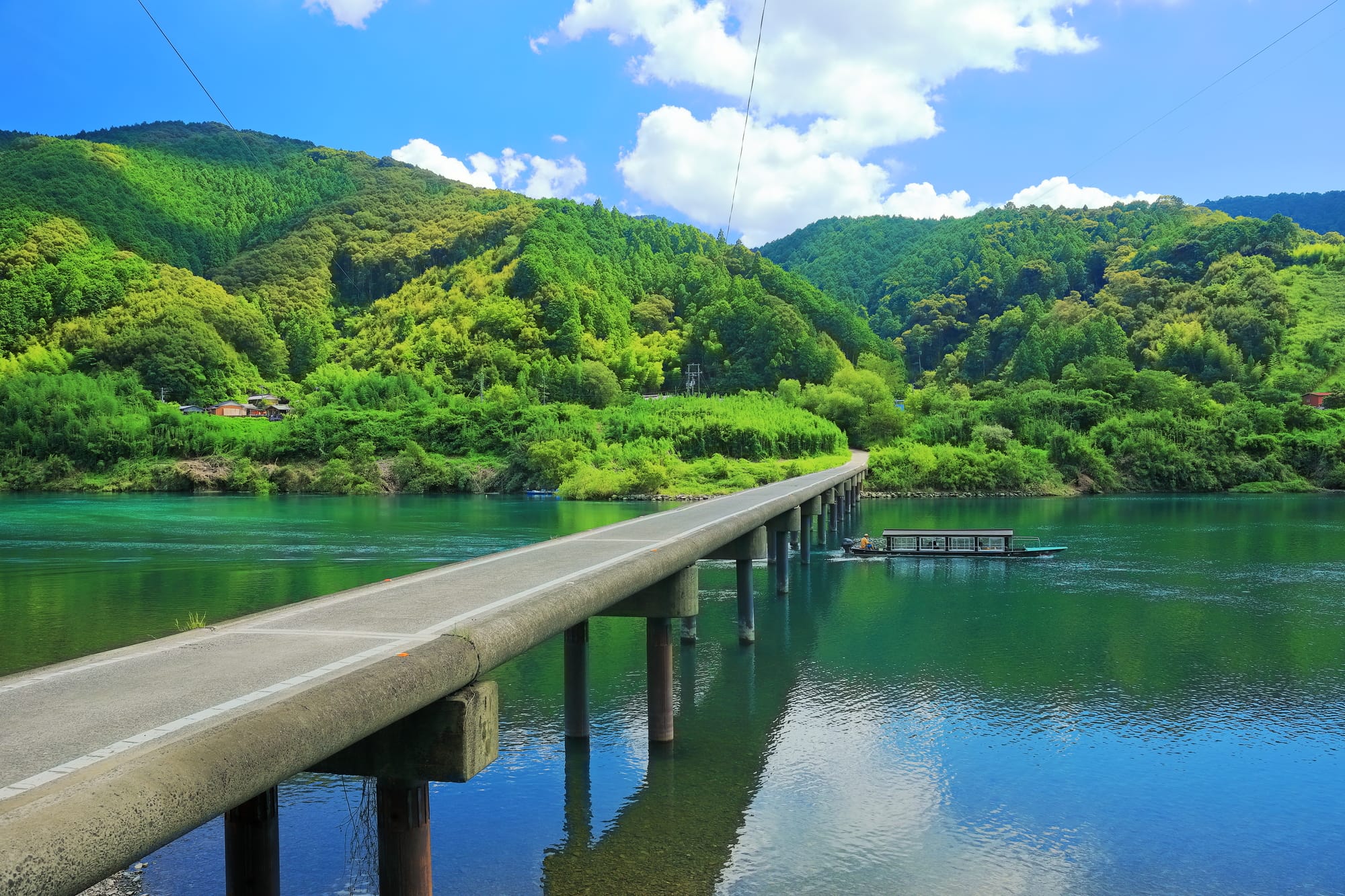
To experience these glowing displays, visitors should head to the Shimanto River in Kochi Prefecture, a winding waterway known for its peaceful scenery and remarkably clear water. Surrounded by rice paddies and tea fields, the river provides an ideal habitat for several species of firefly. During the firefly season, sightseeing boats offer a quiet way to observe the insects from the water as they drift through the riverside darkness. Visitors are encouraged to avoid bright lights, camera flashes and loud noises so as not to disturb the fireflies during their short breeding season. The best viewing times are typically between 7:30 p.m. and 9 p.m., with evening boat tours available during peak season.
During the day, visitors can explore the Shimanto River’s 48 chinkabashi, or submerged bridges, built without railings so they can withstand seasonal flooding. Low to the water and blending naturally into the landscape, they have become one of the defining features of Shikoku’s longest river.
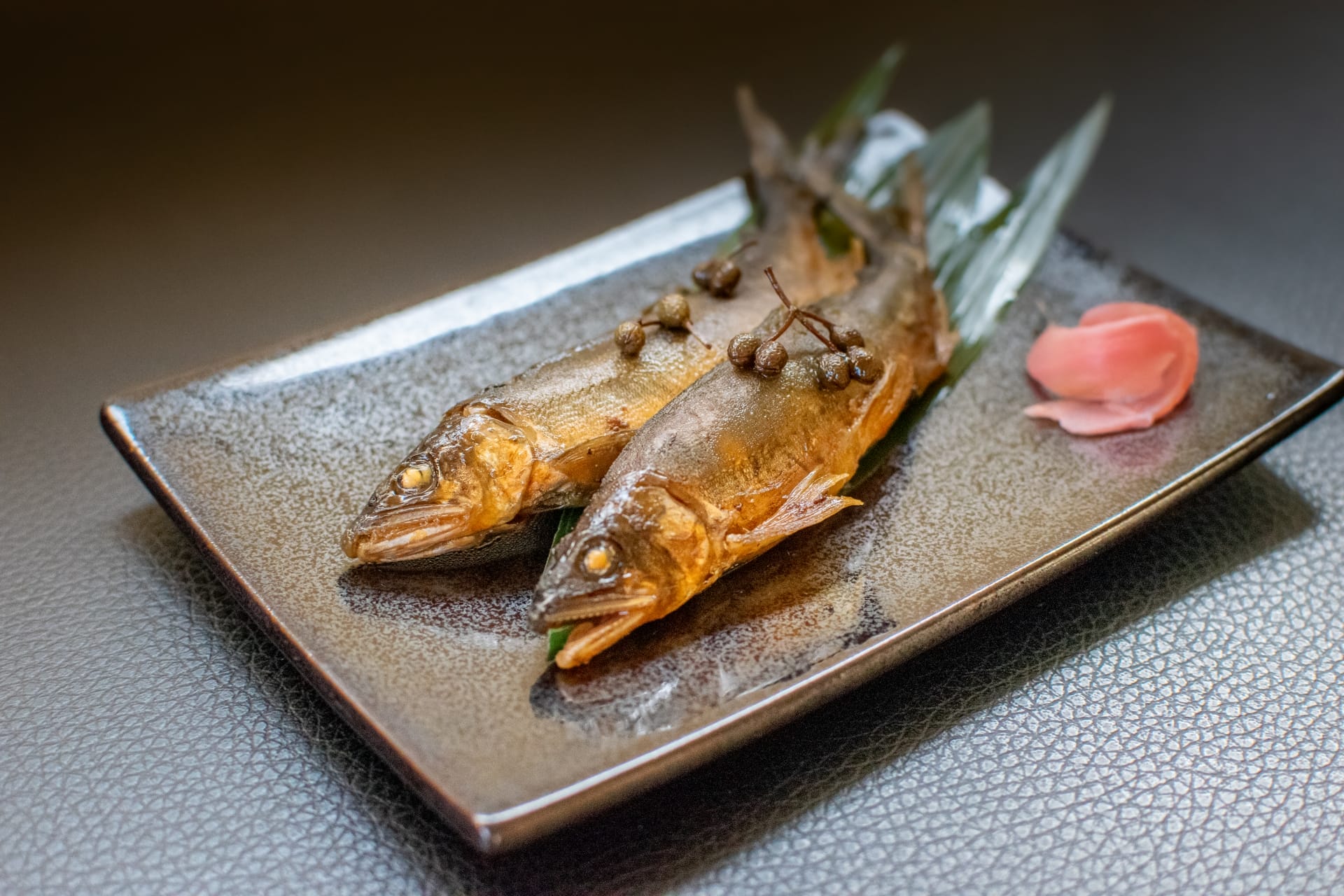
Ayu sweetfish simmered in soy sauce and sugar, known as kanroni, are a seasonal specialty of the Shimanto River region
Nearly 200 kilometers long, the Shimanto River is not only a place for activities such as canoeing and paddleboarding, but also a source of some of Kochi’s best local ingredients. During the summer months, ayu sweetfish—often called the “queen of the clear stream”—are a seasonal specialty, commonly prepared as kanroni, slowly simmered in soy sauce and sugar. Their delicate sweetness comes from the river algae they feed on. Freshwater prawns are another local favorite, served either boiled or lightly fried, while the region’s exceptionally clean water also supports the production of flavorful rice and tea.
Though the fireflies appear for only a short time each year, their soft lights have become one of the Shimanto River’s most memorable seasonal sights. Combined with the river’s peaceful scenery and local flavors, an evening spent watching them offers a quiet glimpse into the natural rhythms of Shikoku.
For more details, contact DMC Japan to discuss ideas, locations and rates.
Contact Us