

April: Nara’s Sacred Deer
April 30, 2026
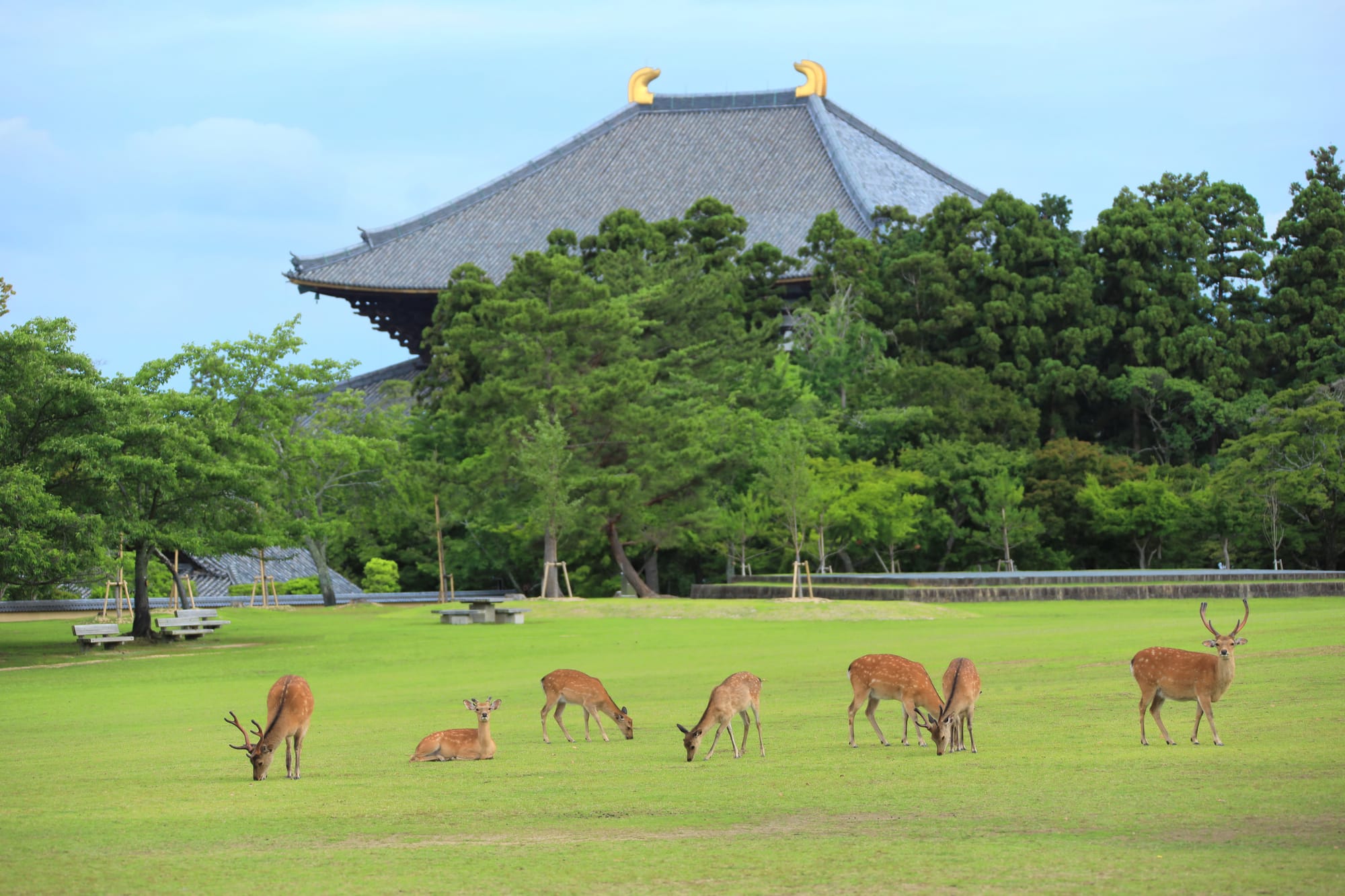
Peaceful scenes of deer grazing beside Japanese temples and shrines may seem too good to be true, however, in Nara they’re almost impossible to avoid. The ancient capital city is home to over 1,400 deer who roam freely, having coexisted with humans for over 1,300 years.
Visitors to Nara will no doubt have heard of the local deer and their penchant for shika-senbei, the cracker treats they have learned to accept from humans, however few will know the true significance of the creatures in the city’s culture. Legend has it that in the early eighth century, Takemikazuchi no Mikoto, a god of thunder and swords, travelled from Kashima-jingu Shrine, in what is now Ibaraki, north of Tokyo, all the way to Nara on a loyal white deer. To honor his safe arrival, Kasuga-taisha Shrine was built and the surrounding forests were protected from hunting, foraging or logging, creating the perfect home for the deer. Considered to be messengers of the gods, the deer were protected at all costs, with severe consequences: the killing of a deer was punishable by death. This reverence has been maintained over centuries and while the deer remain wild, they interact with humans, accepting snacks and even bowing for some.
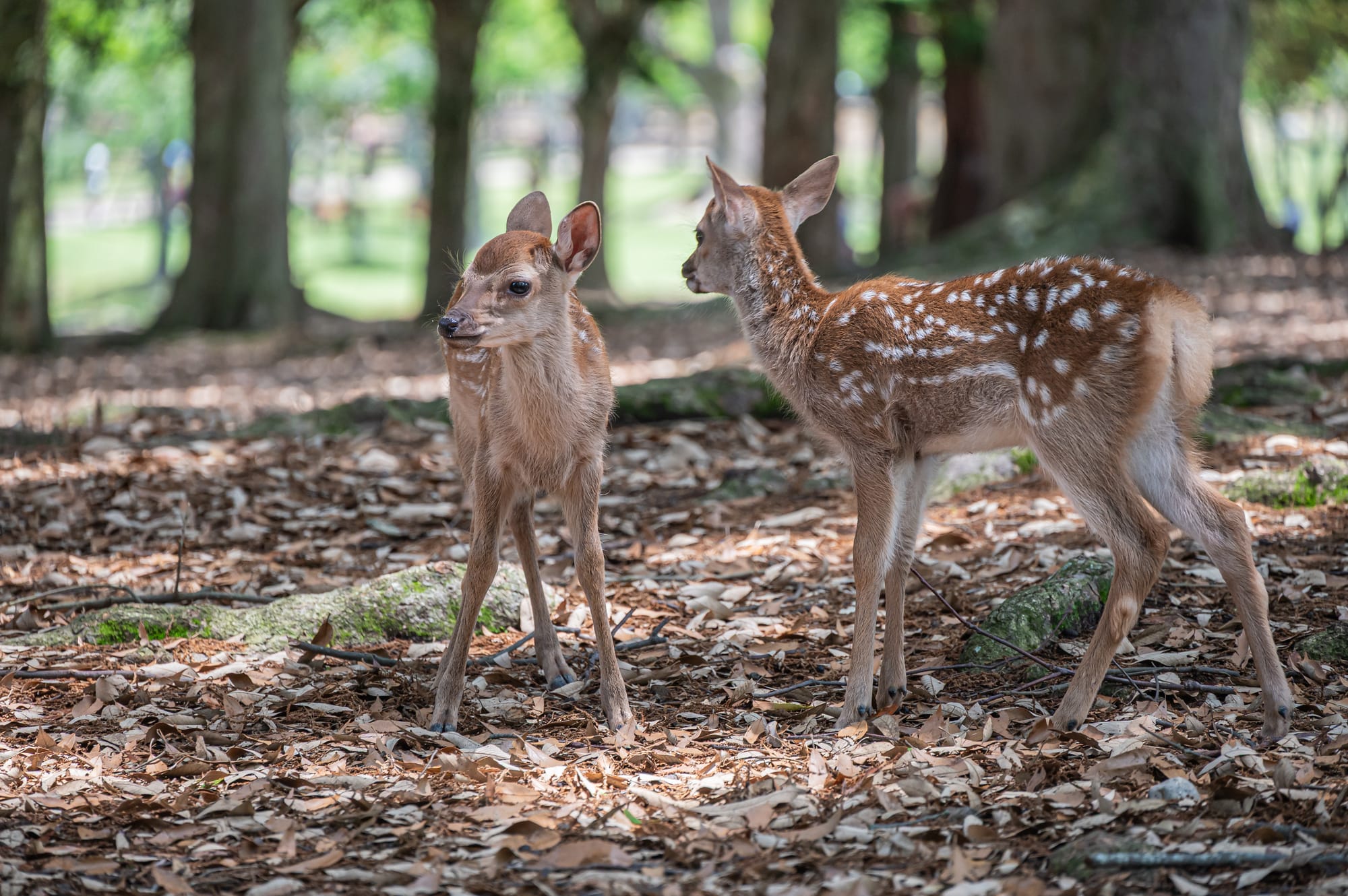
In the dappled shade of Nara Park, two young deer roam quietly (Photo credit: PIXTA)
Known as Japanese Sika, or Cervus nippon, the deer are the same species found elsewhere in Japan, but have maintained a unique genetic type. Careful DNA testing was carried out and determined that Nara deer branched off from an ancestral group in the Asuka period (592–710) and lived without much further interaction. To continue their safe lineage, newborn fawns are protected and spend their first few weeks in a special area of the park. Managed by the Nara Deer Preservation Foundation, the Rokuen deer garden is a protection facility for does and fawns, along with deer in need of care, and is open to visitors. From June to July, baby deer can be observed, with information on the deer, local ecology and their preservation activities. For those lucky enough to visit during fawning season, this is a wonderful way to see the newest additions to the city. Visitors are kept at a safe distance but encouraged to remain quiet, not approach or touch fawns and be careful of does who can become protective of their young.
Another annual event which ties together the city and both its two and four-legged inhabitants is the Deer Antler Cutting Ceremony held each October. Presided over by Kasuga-taisha Shrine and the Preservation Foundation, it opens with a Shinto ritual for safety. Specially trained staff called Seko then carefully catch and trap deer using bamboo poles and rope, before sawing off their antlers. This is necessary to prevent injuries to other deer and people during mating season and is a painless procedure. Visitors can observe from a distance, with ticket donations going to support the preservation of the deer.
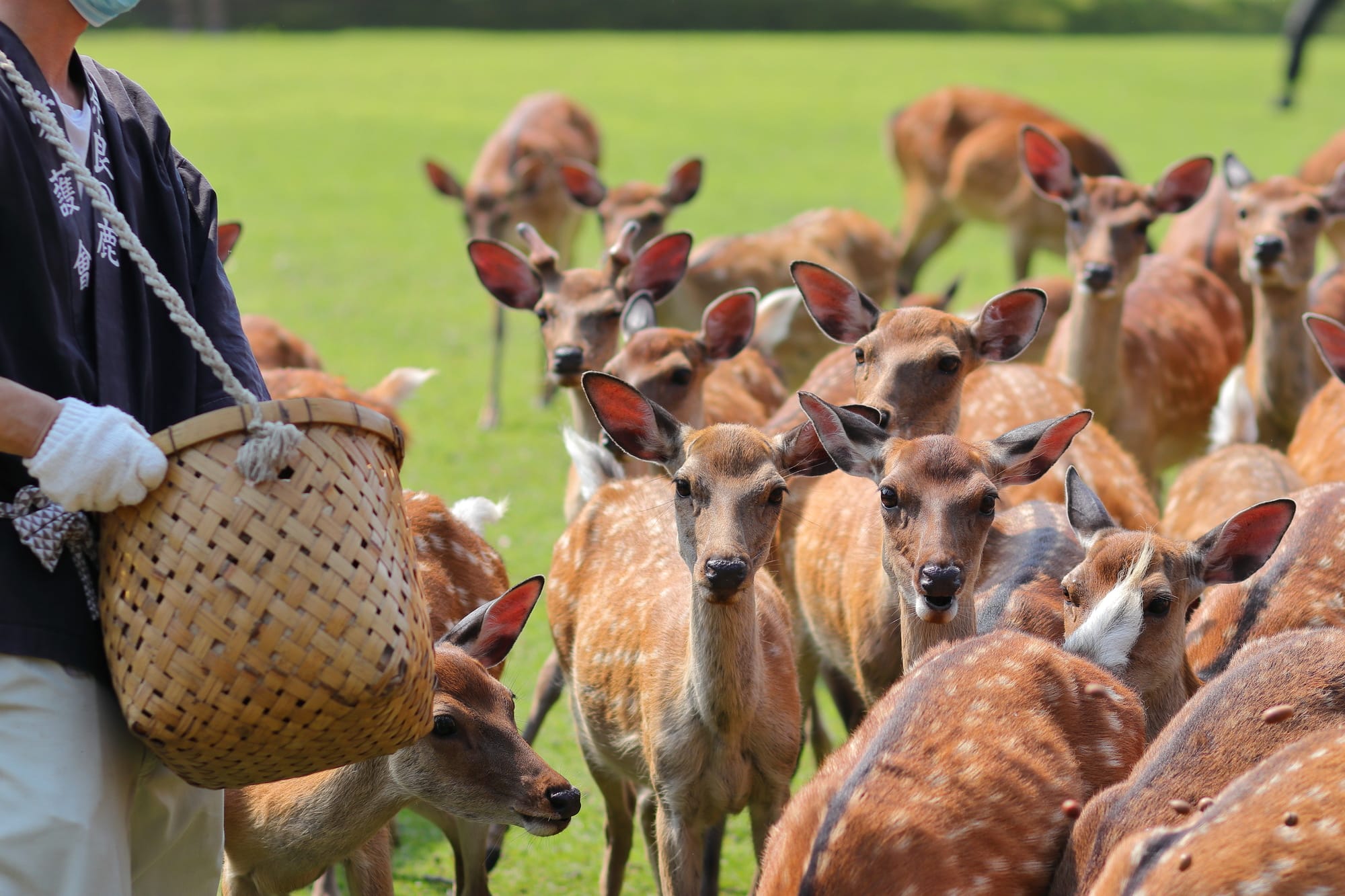
At the traditional Shikayose, deer gather at the sound of a horn as staff offer them acorns (Photo credit: PIXTA)
There are a handful of smaller events throughout the year called Shikayose, where deer gather early in the morning, called from the forests by a horn and fed with acorns. Of course, special events aren’t needed to see the deer—they’re unavoidable. Whether it’s outside the stunning Todai-ji Temple, its 800-year-old Nandai-mon Gate or the beautiful rolling grass of Nara Park, they’re easy to find. To ensure interactions go smoothly, there are a handful of simple rules, such as feeding shika-senbei one by one and doing so relatively quickly, as deer can become impatient. The crackers are made of rice bran and wheat flour and are a safe snack for the deer. If there are no crackers left, visitors should show them empty hands, and the deer will move away. Due to the deer’s habits of eating items, it is important that visitors keep all plastic bags, maps and personal items out of reach and avoid littering, as ingesting foreign items can cause serious complications, especially for fawns. Overall, visitors should continue to the tradition of respecting the deer—photos can be taken from a distance, but if animals walk away or seem agitated, they should be left alone.
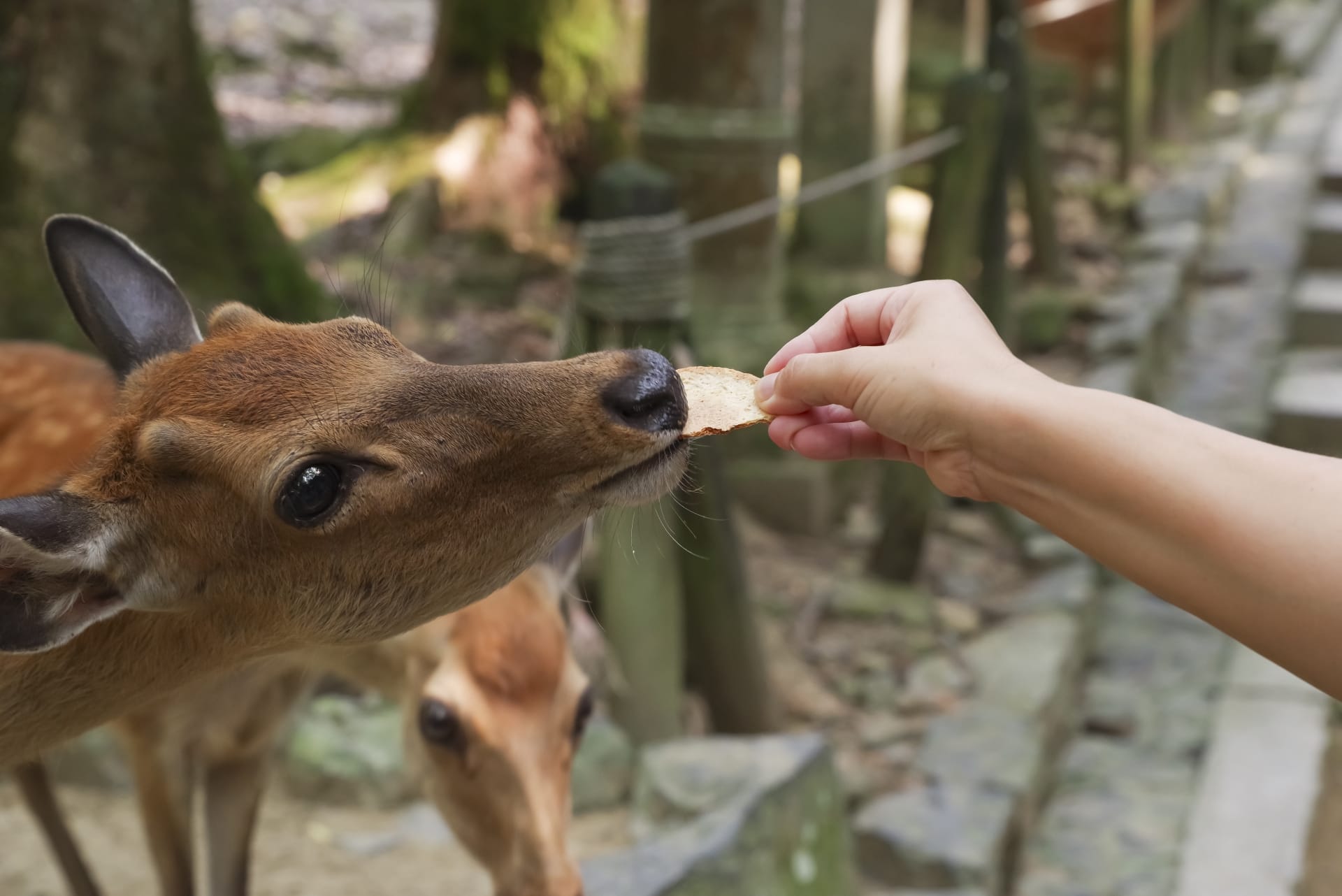
Deer reach out for special crackers offered by visitors—feeding is allowed only with designated shika-senbei
Reflecting centuries of coexistence, Nara’s deer roam freely, safe in the knowledge that they are protected and respected. Drawing in visitors and complementing the incredible local heritage and history, they add a sense of unpredictability to the centuries-old landmarks—a reminder of nature within a vibrant and growing city.
For more details, contact DMC Japan to discuss ideas, locations and rates.
Contact Us