

February: Fukuoka’s Yatai
February 28, 2026
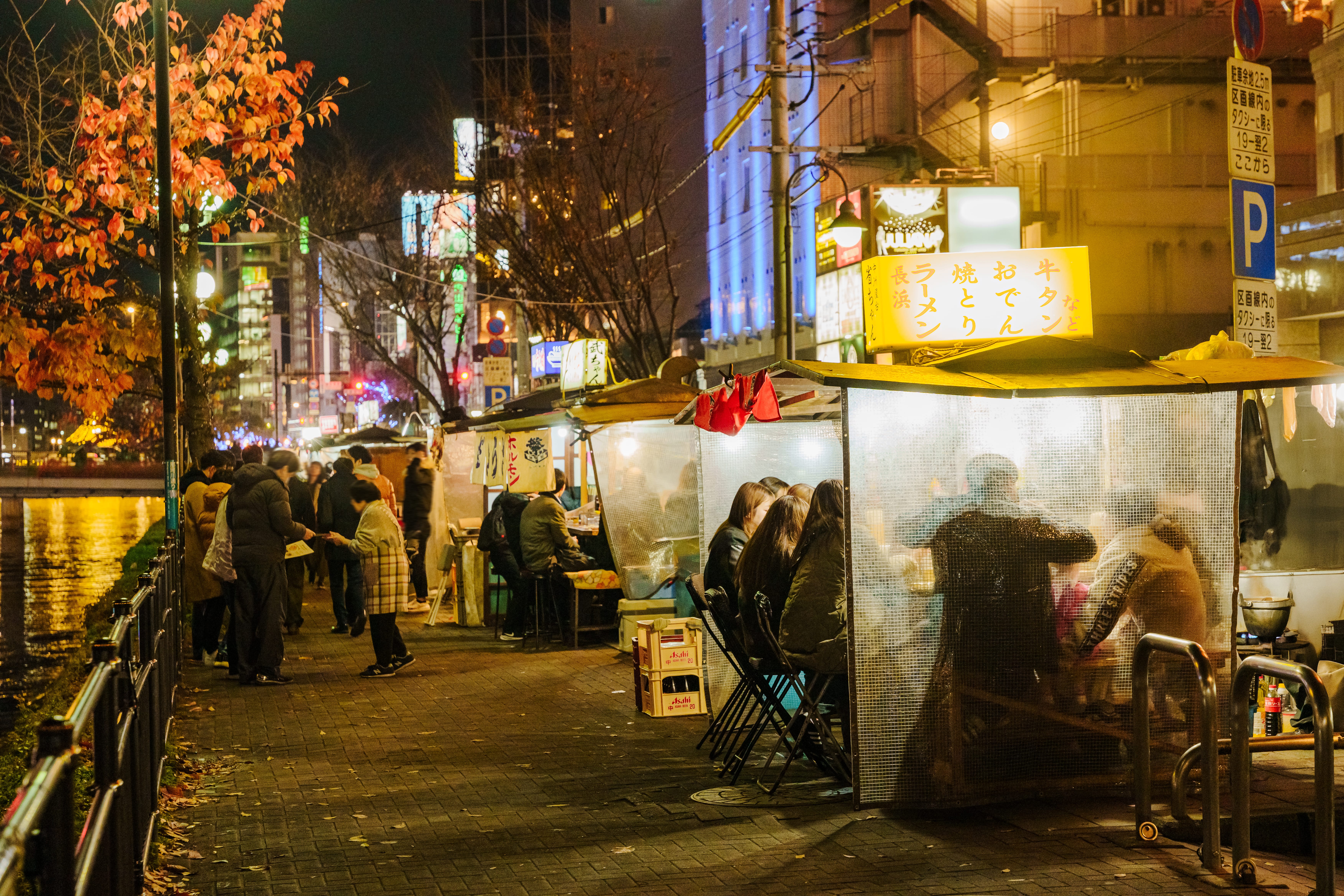
A row of glowing yatai lines the river in Nakasu, drawing night owls in with the promise of good food and even better company (Photo Provided by Fukuoka Prefecture Tourism Association)
This may not be your traditional market, but Fukuoka’s yatai (food stalls) are one of the quintessential experiences for those craving a taste of authentic Japanese food culture. Bringing that festival-feel to the everyday evening, these seated food stalls offer a vast array of dishes and drinks to sample as you yatai-hop your way through town.
Fukuoka is the de facto capital of Kyushu region and is the fifth largest city in Japan with a strong reputation for food, nightlife and amazing festivals. Drawing thousands to its Hakata Dontaku Festival in May and the Hakata Gion Yamakasa each July, along with countless local events, it can often feel that the fun of the festival nights never quite ends in this city. The food stalls are a quintessential part of this, offering covered seating to a handful of patrons at a time, with a huge variety of dishes ranging from grilled meats to ramen to hearty stews.
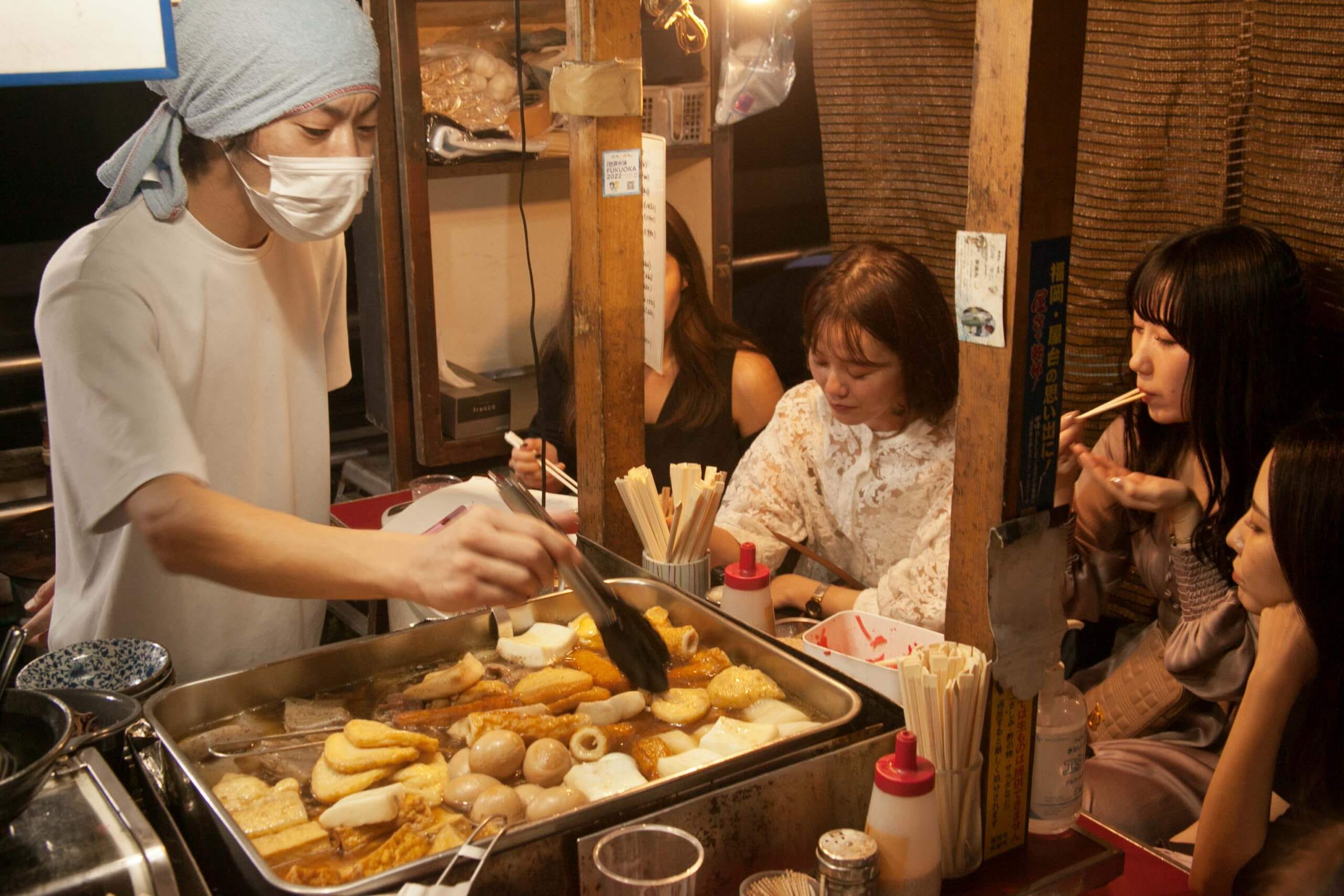
At a yatai counter, the distance between chef and customer disappears—conversations flow as freely as the drinks (Photo Provided by Fukuoka City)
Japanese street food culture can be traced back to the Edo period (1603–1868), when mobile soba vendors operated from food carts in rapidly growing cities. With industrialization in the Meiji era (1868–1912), these stalls became an essential source of quick, affordable meals for urban workers. After World War II, severe food shortages and rationing drove many vendors into the black market, and yatai flourished as a form of small-scale, often illegal, postwar entrepreneurship. Looking to address concerns over hygiene and illegal trading, local authorities stopped issuing new permits around the time of the 1964 Tokyo Olympics, triggering a sharp decline in numbers. Vendor associations formed in the postwar years to support stallholders and help secure their livelihoods, and in 2016 Fukuoka City launched a new licensing program to encourage a new generation of yatai owners.
While they have faced turbulent times, the Fukuoka’s yatai culture is now thriving, with around 100 to browse in three main areas: Tenjin, Nakasu and Nagahama. One of the easiest spots to head to is the entertainment hub and small island of Nakasu, which divides the two sides of the city—Hakata to the East and the castle town of Fukuoka to the West. While they merged in 1889, they retain their individual personalities, and Nakasu sits between them as the social meeting of minds, offering food, drink and fun. There’s no better place to dive into yatai food than at the stalls themselves—the most casual of eateries, where locals and visitors of all ages mingle shoulder to shoulder. The mix of customers is rivalled only by the stallholders, with eager newcomers working alongside veteran chefs and even a daring Frenchman putting a haute-cuisine spin on street food.
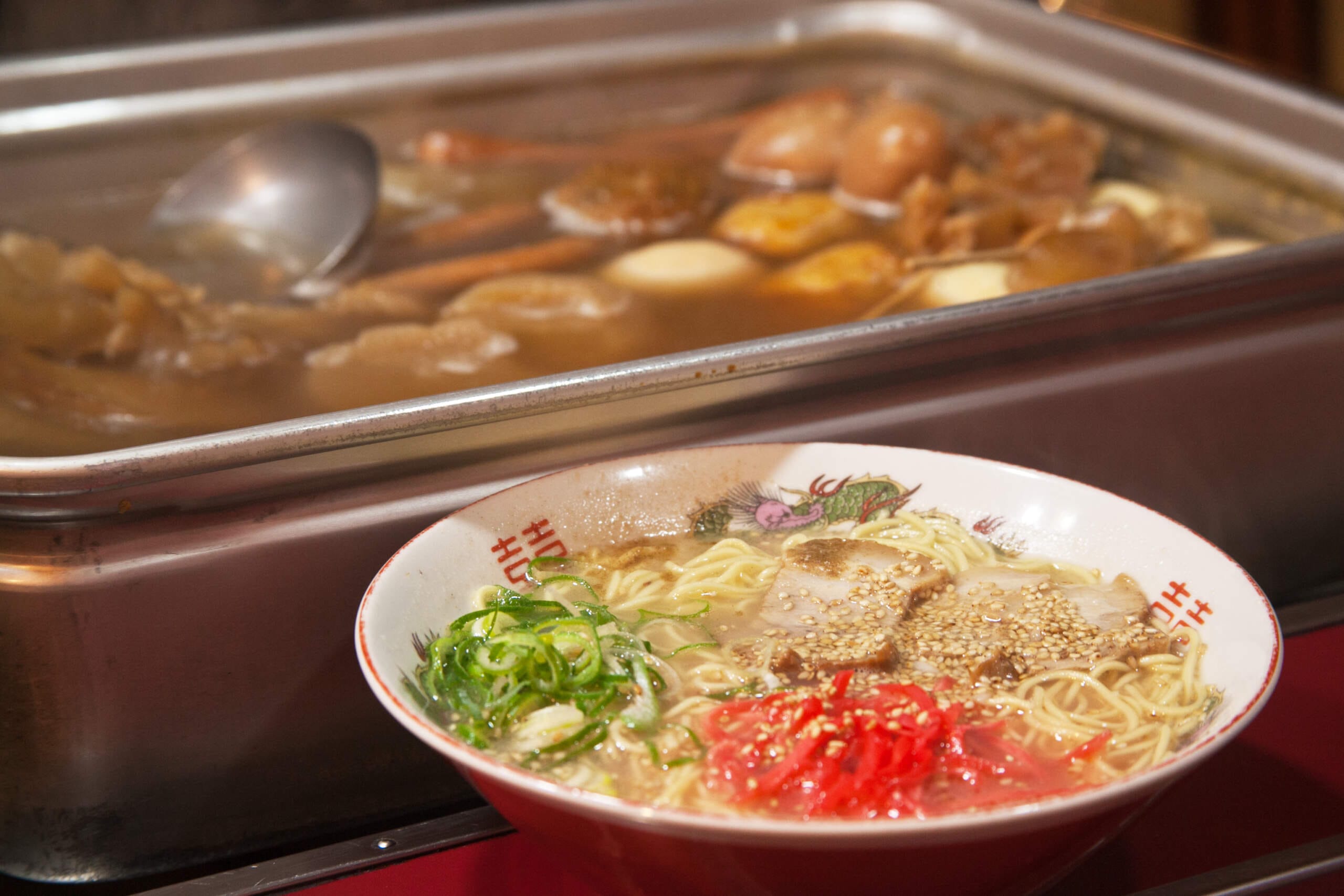
Steam rises from a comforting spread of Hakata ramen and oden—the flavors of Fukuoka best enjoyed shoulder to shoulder (Photo Provided by Fukuoka City)
Needless to say, yatai are one of the best places to dive into Fukuoka’s signature dishes. Bowls of Hakata ramen arrive steaming, the thin noodles swimming in a rich, creamy pork-bone broth, while bubbling pots of motsunabe—offal and vegetables simmered in a deeply savory soup—are perfect for cooler evenings. There are plenty of surprises, too. Mentai tamagoyaki features a fluffy rolled egg sliced to reveal a center packed with spicy pollock roe (mentaiko). A more recent staple is yaki-ramen, where those same Hakata noodles are stir-fried on a hot iron plate, the sauce caramelizing and the flavors seared into every strand. And if you’re craving the classics, gyoza dumplings crackle on the grill, yakitori sizzles over charcoal and oden sits quietly soaking up flavor in its light dashi broth, ready to be picked and chosen.
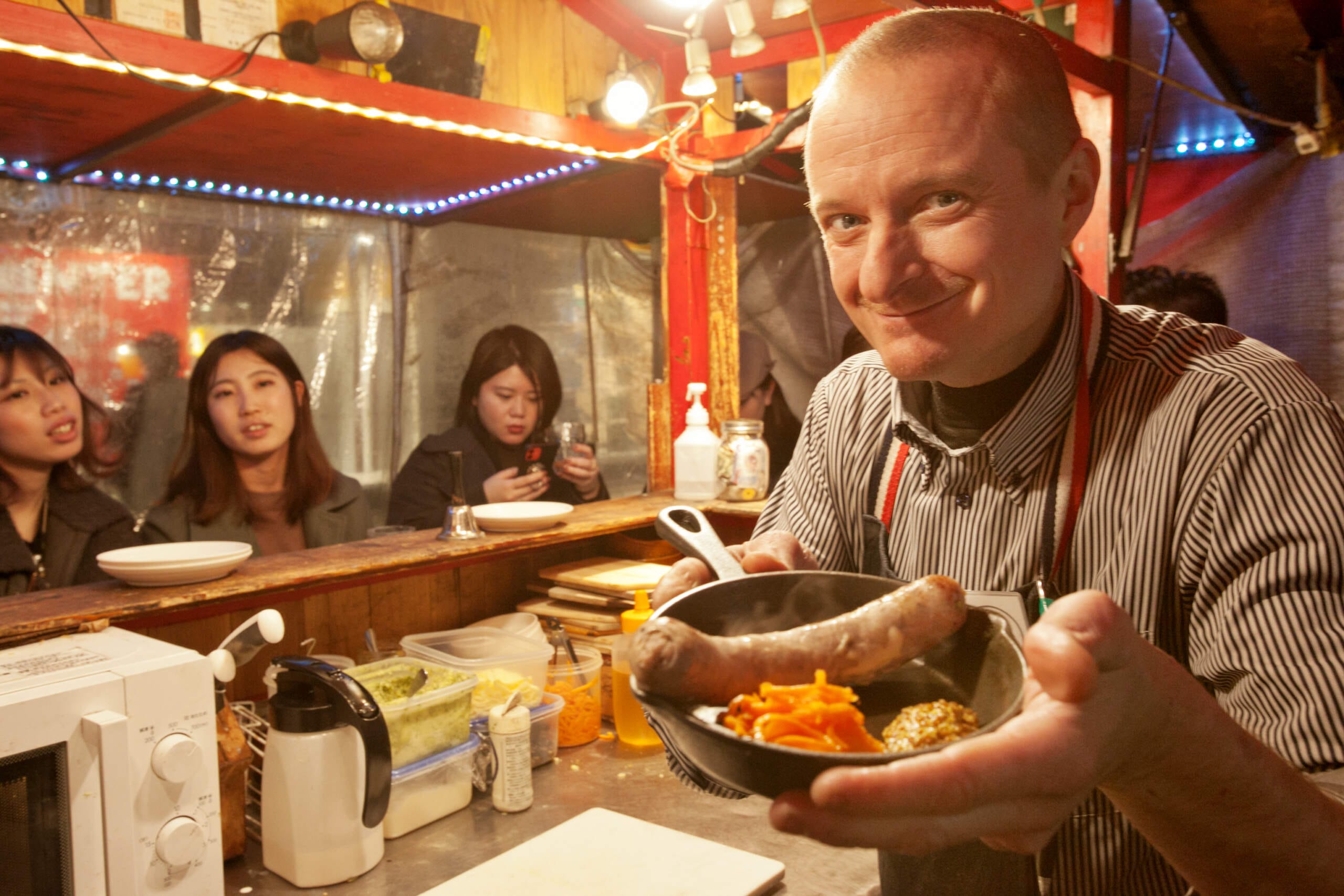
From escargot to pot-au-feu, Chef Rémy brings a taste of France to Fukuoka’s street-side counters (Photo Provided by Fukuoka City)
Genkai is one of Fukuoka’s longest-running yatai, founded in 1950, where golden tempura is served in a time-honored style that has remained unchanged for decades. For something completely different, Chez Rémy brings a touch of France to the riverside, serving escargot and lasagna beneath the open sky. Ultra C is another popular Nakasu stop, drawing a lively crowd for crisp kushikatsu and cold beer. For a taste of yatai’s new generation, head to Tsunatsuna—its name reflecting the idea of connection—run by one of the scene’s youngest stallholders.
Whichever stall you find yourself at, embrace the friendly spirit of yatai and strike up a conversation—with the owner or the person next to you. Not sure what to order? A simple “Osusume wa nan desu ka?” will bring a recommendation from the chef, or you can point to a neighbor’s dish and follow their lead. Most stalls are cash only, so come with yen in hand. When you’re ready to move on, a cheerful “Gochisousama deshita” is the perfect way to say thanks before heading off in search of your next plate.
For more details, contact DMC Japan to discuss ideas, locations and rates.
Contact Us