

December: Tori no Ichi
December 26, 2025
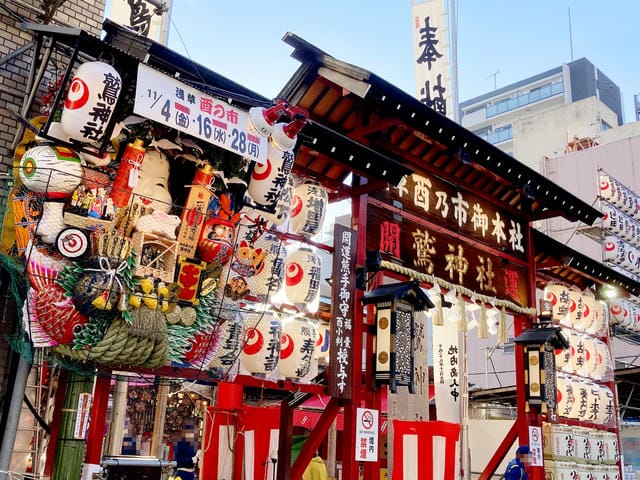
One of the most auspicious festivals of the year, Tori no Ichi lights up Asakusa each November as worshippers gather on the Rooster Days to seek prosperity through beautifully decorated kumade rakes. Beginning with the first midnight drum and unfolding through the day, the event has grown from a humble harvest celebration into one of Tokyo’s best-known festivals—yet it retains its timeless charm, offering a vibrant, communal moment to welcome the new year with joy, energy and enduring tradition.
Tori no Ichi has been held since the Edo Period, with its origins linked to historic celebrations in what was once Hanamata Village—today part of Adachi Ward. There, farmers gathered at Washi Daimyo-jinja Shrine to offer thanks for the harvest to the guardian deity Washi Daimyojin, known affectionately as Otori-sama. In earlier days, villagers offered live chickens in gratitude, a symbolic gesture connected to the rooster motif of the festival; after prayers, the birds were said to be released near the Kannon Hall of Asakusa’s Senso-ji Temple. Though such practices are no longer part of the modern event, they hint at the deep agricultural and spiritual roots from which today’s celebrations grew.
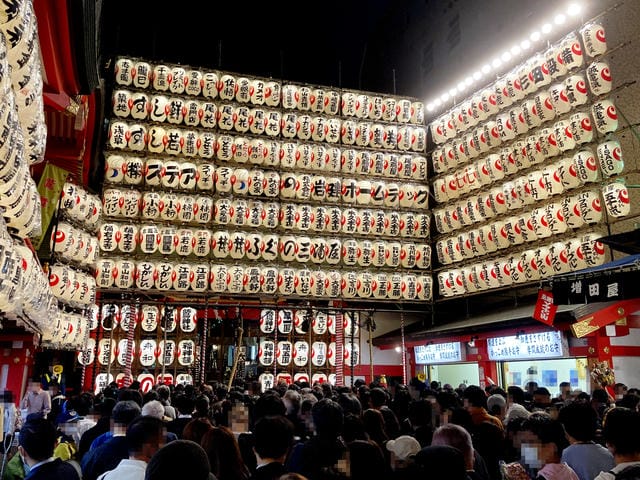
The shrine grounds come alive at night, glowing with lantern light and bustling with festive crowds
As Edo expanded, the festival’s markets attracted townspeople from far and wide, transforming simple farm tools—especially bamboo rakes—into auspicious talismans. Over time these rakes evolved into the lavish kumade seen today, adorned with charms for wealth, success and happiness. Purchasing a kumade became a central ritual of Tori no Ichi, symbolizing the wish to “rake in” good fortune for the year ahead.
Today, Tori no Ichi in Asakusa is centered around Otori-jinja Shrine and its neighboring Chokoku-ji Temple—together long regarded as the spiritual heart of the festival. Fortunately for visitors, there is more than one chance to take part each year. Tori no Ichi is held on every Rooster Day of the lunar calendar, which typically occurs two times—occasionally three times—in November. These are known as Ichi-no-Tori (First Rooster), Ni-no-Tori (Second Rooster), and, in rarer years, San-no-Tori (Third Rooster). At Asakusa, the festival begins at midnight with the dramatic ichiban taiko drum announcing the opening of the grounds, and the festivities continue throughout the day into the night.
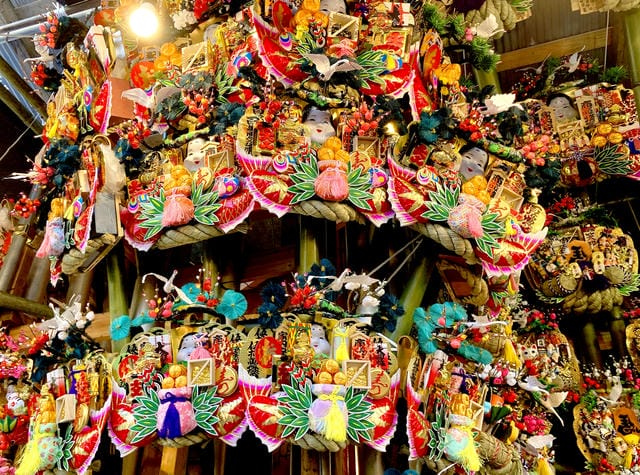
Stalls lined with brilliantly decorated kumade rakes, each crafted to bring prosperity in the year ahead
The stars of the festival are the kumade—lucky bamboo rakes—stacked high in glittering displays at every stall. Their origin is tied to the simple agricultural tools sold at early harvest markets, but as the festival gained popularity in Edo, the rakes transformed into elaborate talismans for business prosperity. Over time, layers of folklore enriched their symbolism: some say the spread of the rake resembles an eagle’s claw, catching fortune; others speak of the rake-shaped remains of a military fan dedicated to the gods by a triumphant commander. Whatever their genesis, today’s kumade are dazzling works of folk artistry, crafted in every imaginable size and style.
Visitors are often amazed by the variety, as stalls brim with countless combinations of auspicious motifs. Red Rakes may feature the Seven Lucky Gods alongside symbolic daifukucho (lucky account books); basket-shaped Mino Rakes often include Okame female deity mask and wooden measuring cup; while Green Rakes highlight evergreen pine and classic emblems such as cranes, turtles, gold coins and plum blossoms. Other frequently seen ornaments include shimenawa ropes, daruma dolls, tiny mikoshi (portable shrines), lucky mallets, rice bales and more. While some shoppers choose kumade tailored for specific blessings—business success, household safety, bountiful harvests—most simply pick the one that sparks joy and feels right for the year ahead.
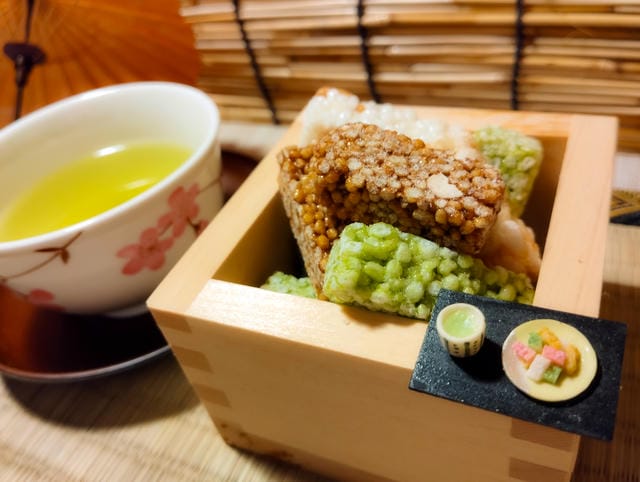
Asakusa’s classic treat, Kaminari-okoshi, served with a cup of green tea—a sweet break during the festivities
Exploring the festival means wandering through a sea of around 800 to 900 stalls, their lanterns lighting up the night across the historic Asakusa area. The atmosphere is festive and warm, and the scent of street food weaves through the crowds. Local treats such as Bettarazuke pickles and Kaminari-okoshi rice crackers appear alongside classic festival favorites like yakitori, okonomiyaki and takoyaki, providing welcome fuel between kumade browsing. Stay late, admire the craftsmanship of the rakes, and soak in the electric yet comforting atmosphere of Asakusa on Tori no Ichi. It is not only a memorable night out, but a joyful way to usher in luck for the coming year.
For more details, contact DMC Japan to discuss ideas, locations and rates.
Contact Us